
Bring imaging reports, prior injection notes, therapy records, medication lists, allergies, referral information, and your most important functional goals.
Neuromodulation
Spinal Cord Stimulator Implants, explained clearly before any next step.
Spinal cord stimulation uses a trial-first approach to evaluate whether electrical modulation may help selected chronic nerve-pain patterns.
Visual guide
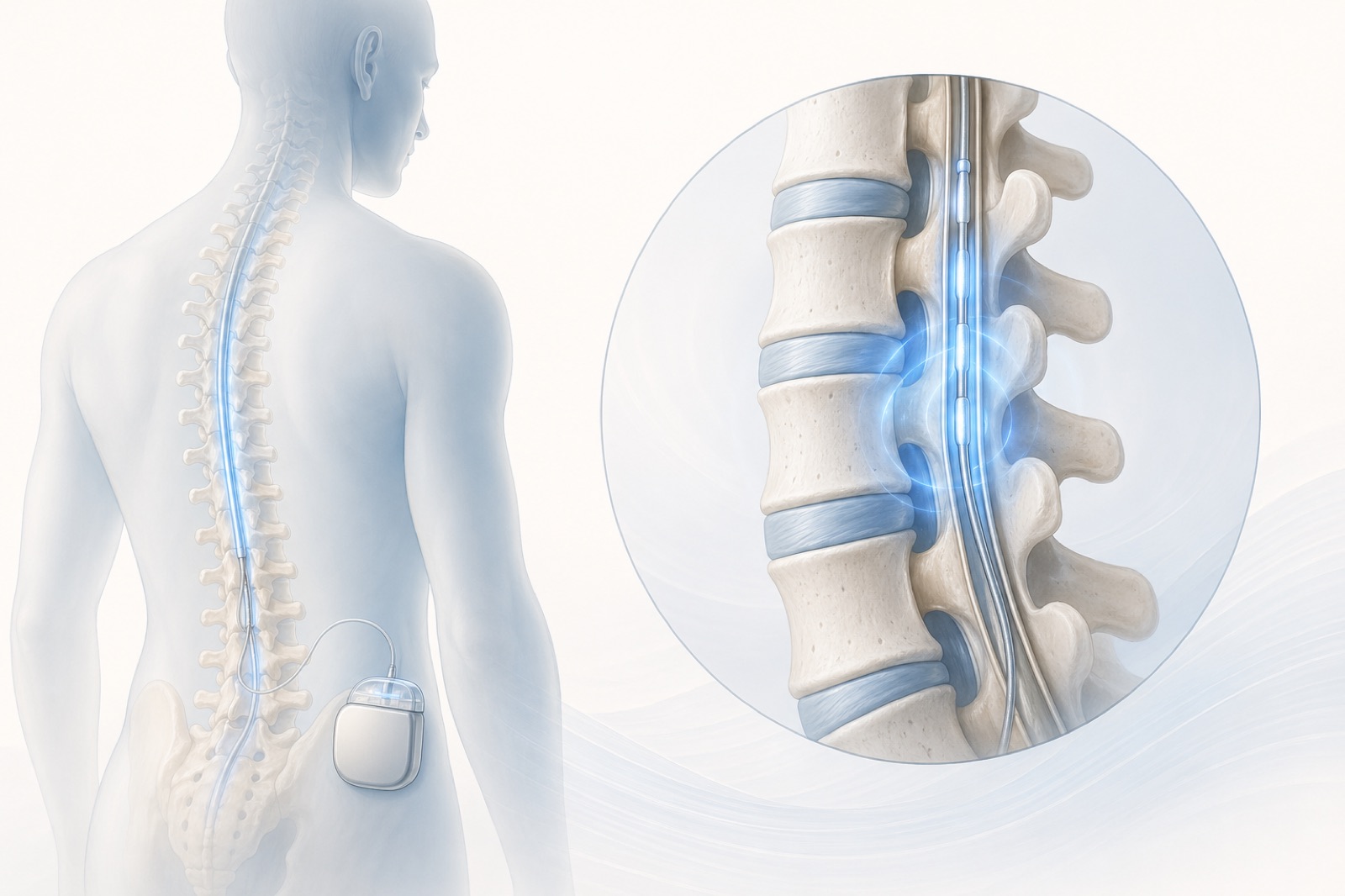
A simple picture of the treatment target.
The illustration is intentionally simplified. It helps patients understand the general anatomy and target area, but it does not replace a physician’s exam, imaging review, or individualized procedural plan.
NeuromodulationDiagnosis-firstSelected patients
Spinal Cord Stimulator Implants in Houston and Webster
Neuromodulation uses a trial-first device-based approach for selected chronic nerve-pain patterns after conservative care and screening.
At Gulf Coast Pain & Spine, treatment conversations are tied to the likely pain generator, prior care, imaging, exam findings, safety factors, and functional goals.
Why this treatment may be effective for selected patients
Neuromodulation may help selected chronic nerve-pain patterns by changing how pain signals are processed rather than removing anatomy.
The goal is not to promise a cure. The goal is to match the treatment to the right diagnosis, use response information wisely, and help patients understand the role of the procedure in the broader care plan.
How the procedure is typically done
Most device-based treatments use a trial-first pathway. Temporary leads are placed near the target, the trial response is reviewed, and permanent treatment is considered only if the trial is meaningful.
- Confirm diagnosis, prior care, imaging, and psychological or safety screening requirements.
- Place trial leads in the epidural space and test coverage during a short trial period.
- Review trial response before considering permanent implantation.
What the visit and follow-up conversation usually covers
The team explains positioning, the target, safety checks, and what sensations may be expected during the procedure.
Response, soreness, activity guidance, warning signs, and next steps are reviewed in the context of the original diagnosis.
Frequently asked questions
Can I request Spinal Cord Stimulator Implants directly?
You can ask about any treatment. The physician will recommend a procedure only when the symptoms, exam, imaging, prior care, and safety factors support it.
How do I know if I am a candidate?
Candidacy depends on diagnosis, medical history, medication risks, imaging, prior response to care, and whether the treatment target fits your pain pattern.
Is this page medical advice?
No. This page is educational and is not a substitute for individualized medical advice, diagnosis, or treatment. For emergencies, call 911.
Take the next step
Request a diagnosis-first pain evaluation.
Call the practice or request an appointment online. The team can help match your symptoms to the right visit, location, and next step.