
Joint Pain
Joint pain care starts by confirming the real pain source.
Pain around a joint may come from the joint itself, nearby tendons or bursa, irritated nerves, or pain referred from the spine. The first step is sorting out the pattern.
A calmer way to understand joint pain.
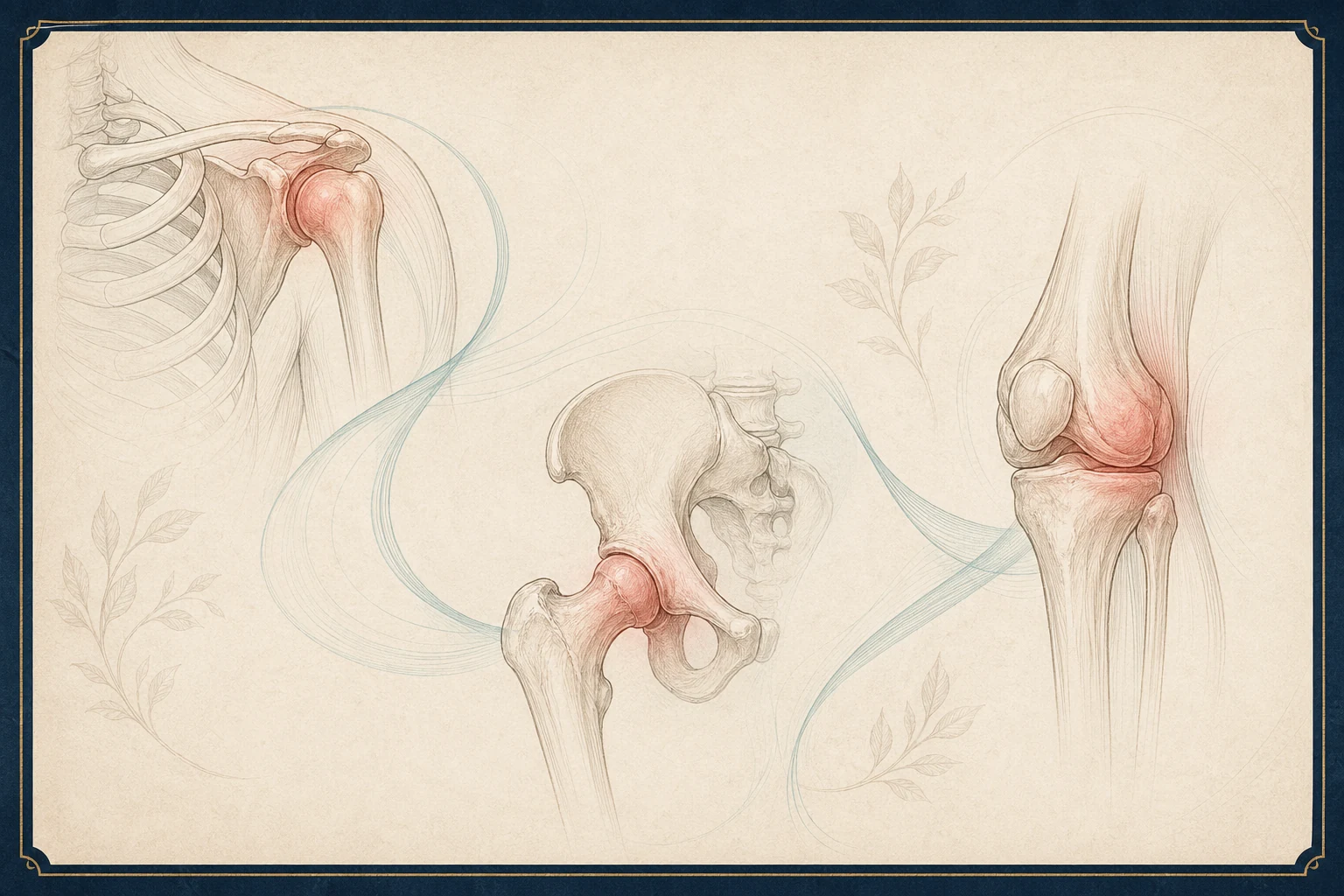
This illustration is a simplified educational view. It is meant to support the discussion on this page, not replace an individualized exam, imaging review, or medical diagnosis.
Joint pain in Houston and Webster
Joint pain may affect walking, stairs, lifting, reaching, gripping, sleep, work, or exercise. Common contributors include osteoarthritis, inflammation, prior injury, tendon problems, bursitis, and referred spine or nerve pain.
Gulf Coast Pain & Spine serves patients from Houston, Webster, Clear Lake, League City, Friendswood, Pearland, Pasadena, and surrounding Greater Houston communities.
How the diagnosis-first visit works
Your physician may review where pain is felt, what movements reproduce it, prior imaging, injection history, therapy response, and whether symptoms behave like a local joint problem or referred pain.
The goal is to connect symptoms, exam findings, imaging, prior response to care, insurance or referral requirements, and practical goals before recommending a next step.
What treatment conversations may include
Depending on the joint and diagnosis, treatment discussions may include physical therapy coordination, medication review, image-guided joint injections, bursa injections, nerve blocks, radiofrequency options for selected knee pain, or regenerative discussions for selected cases.
Not every patient is a candidate for every procedure. Your physician will recommend care based on diagnosis, medical history, imaging, exam, and safety considerations.
Frequently asked questions
Is joint pain always arthritis?
No. Arthritis is common, but tendon, bursa, nerve, spine, and injury-related patterns can mimic or overlap with joint pain.
Do you treat every joint problem?
The practice focuses on pain evaluation and interventional options when appropriate. Some structural injuries may require orthopedic evaluation.
Is this medical advice?
No. This page is educational and is not a substitute for individualized medical advice, diagnosis, or treatment. For emergencies, call 911.
Request a diagnosis-first pain evaluation.
Call the practice or request an appointment online. The team can help match your symptoms to the right visit, location, and next step.