
Degenerative Disc Disease
Disc degeneration on imaging is only one part of the story.
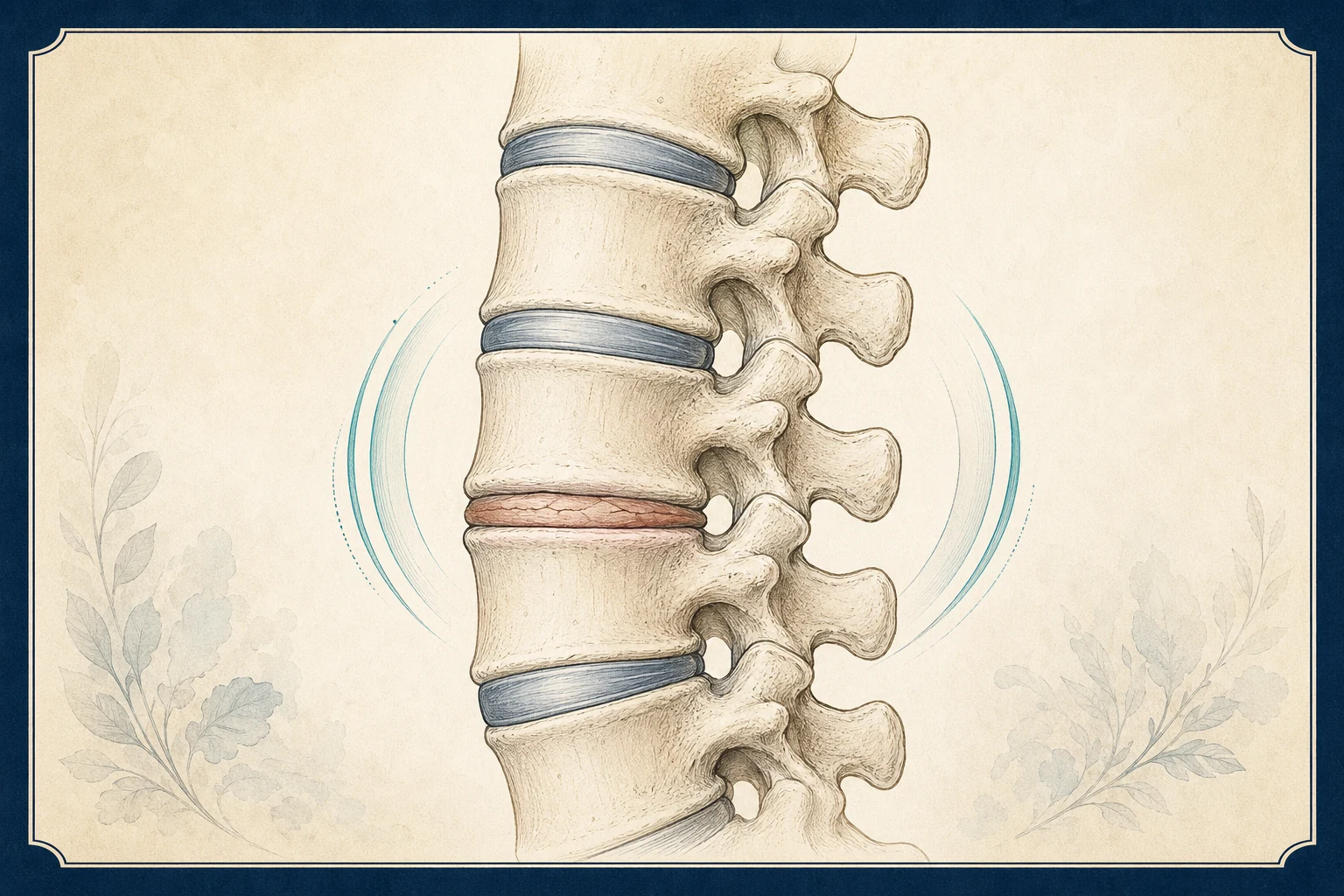
Degenerative disc disease describes age- and wear-related disc changes. The key question is whether those changes are actually driving pain, nerve symptoms, or functional limitation.
A calmer way to understand degenerative disc disease.
This illustration is a simplified educational view. It is meant to support the discussion on this page, not replace an individualized exam, imaging review, or medical diagnosis.
Degenerative disc disease evaluation
Disc degeneration may appear in the neck or low back and can be associated with axial pain, stiffness, flare-ups, or nerve irritation when disc changes narrow nearby spaces. Some people have imaging changes with little or no pain.
Gulf Coast Pain & Spine serves patients from Houston, Webster, Clear Lake, League City, Friendswood, Pearland, Pasadena, and surrounding Greater Houston communities.
How the diagnosis-first visit works
The visit may include review of imaging level-by-level, symptom location, neurologic findings, prior treatment response, activity limits, and whether pain behaves more like disc, facet, nerve, SI joint, or mixed pain.
The goal is to connect symptoms, exam findings, imaging, prior response to care, insurance or referral requirements, and practical goals before recommending a next step.
What treatment conversations may include
Treatment conversations may include conservative care coordination, medication review, epidural steroid injections for nerve irritation, diagnostic blocks for overlapping facet pain, or selected advanced options for persistent disc-related pain.
Not every patient is a candidate for every procedure. Your physician will recommend care based on diagnosis, medical history, imaging, exam, and safety considerations.
Frequently asked questions
Is degenerative disc disease the same as arthritis?
It is related to wear-and-tear change, but it specifically refers to spinal discs. Arthritis more often refers to joints, including facet joints in the spine.
Can a disc look abnormal without causing pain?
Yes. That is why treatment should be based on the whole clinical picture, not imaging alone.
Is this medical advice?
No. This page is educational and is not a substitute for individualized medical advice, diagnosis, or treatment. For emergencies, call 911.
Request a diagnosis-first pain evaluation.
Call the practice or request an appointment online. The team can help match your symptoms to the right visit, location, and next step.