
Start with the full picture.
History, exam, imaging review, prior treatment response, medications, and functional goals shape the first plan.
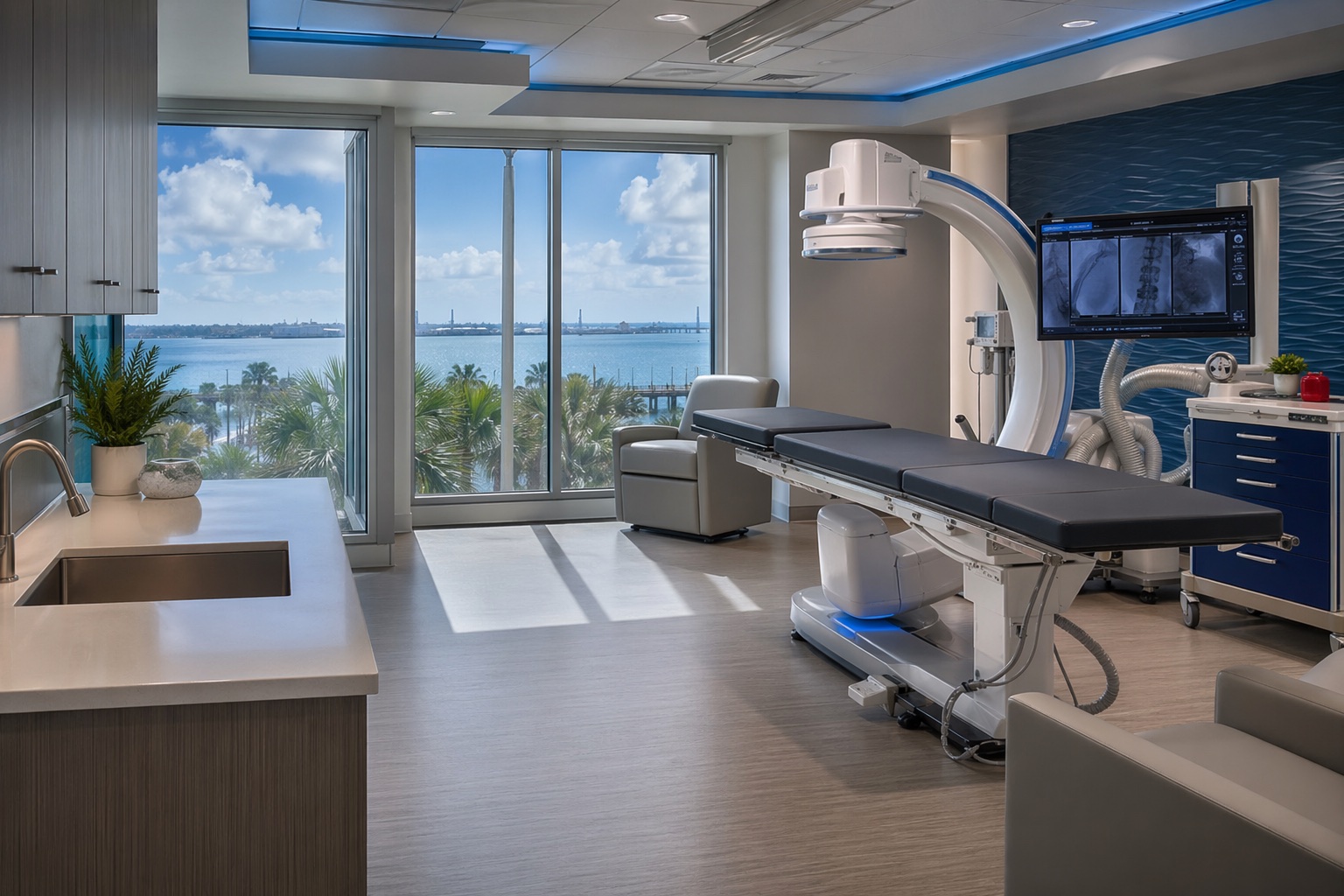
Board-certified pain specialists
When back, neck, joint, nerve, or spine pain will not let up, Gulf Coast Pain & Spine starts with the question that matters most: what is actually generating the pain — and what can be done about it?
Interventional, multimodal pain care for patients who need careful screening, clear options, and a practical next step.
Call (832) 916-2075 →
Alongside 850+ Google reviews, this local recognition gives new patients another reason to feel confident choosing Gulf Coast Pain & Spine.
850+ Google reviews with a 4.9-star rating highlight physician trust, staff warmth, clean offices, and clear communication.
Care is led by fellowship-trained pain physicians, with diagnostic blocks, imaging review, and advanced procedure planning.
The team reviews history, imaging, prior treatment response, medications, insurance/referral needs, and goals before recommending the next step.
Most patients arrive with more than pain — they bring imaging, prior injections, medications, work limits, sleep disruption, and questions about what is still possible. The first job is to organize that story clearly.
History, exam, imaging review, prior treatment response, medications, and functional goals shape the first plan.
When appropriate, diagnostic injections and image-guided evaluation help clarify whether pain is disc, facet, nerve, SI-joint, or joint driven.
Procedures, therapy coordination, medications, and advanced options are selected around the patient’s problem and goals.

Patients come in with real limitations: work, sleep, family, walking, lifting, travel. The care pathway is built to clarify the likely source of pain and explain the next reasonable option before treatment begins.
See conditions treatedSpine, back, joint, nerve, post-surgical, and chronic pain patterns treated by interventional pain specialists. Headache care is not a focus of the practice.
Pain with standing, bending, sitting, lifting, or walking may point toward disc, facet, stenosis, fracture, or SI-joint sources.
Explore back pain → Pain down the legNumbness, tingling, burning, or electric pain often starts with determining which nerve pathway is irritated.
Explore sciatica → Neck pain with arm symptomsUpper back discomfort, shoulder pain, hand numbness, or arm pain deserve careful cervical spine and nerve evaluation.
Explore neck pain → Pain after spine surgeryPersistent symptoms after surgery need a fresh look at imaging, nerve patterns, and prior treatment response.
Explore options → Shoulder, hip, knee, or SI painJoint and pelvis pain can require different diagnostic questions before treatment is selected.
Explore joint pain →Clear illustrations help patients understand how common image-guided procedures are intended to work. Your physician will explain whether a procedure fits your diagnosis, imaging, and goals.
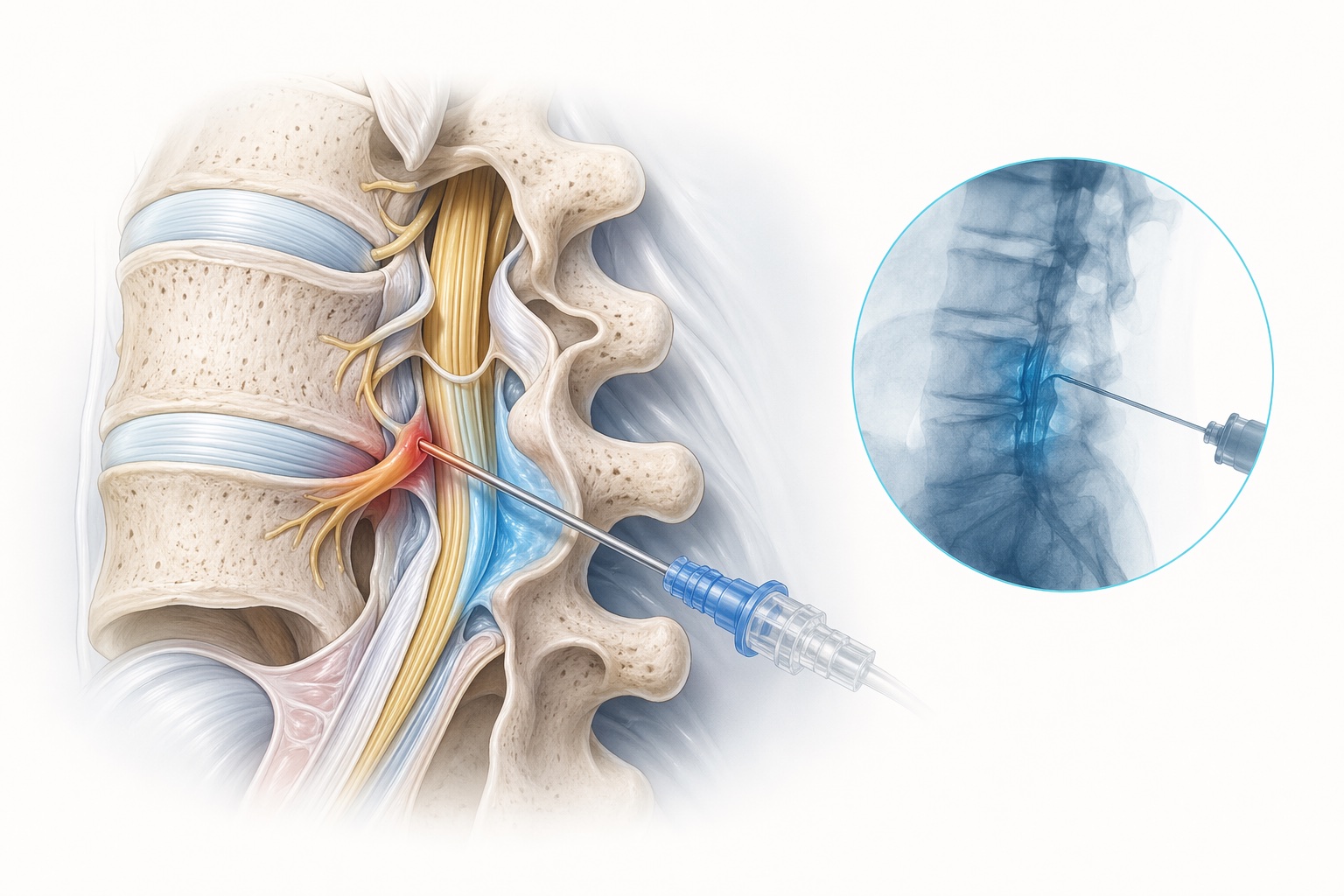
A common fluoroscopy-guided, non-surgical option that may help selected neck, back, arm, or leg pain when inflammation around spinal nerves is part of the problem.
Learn about epidurals →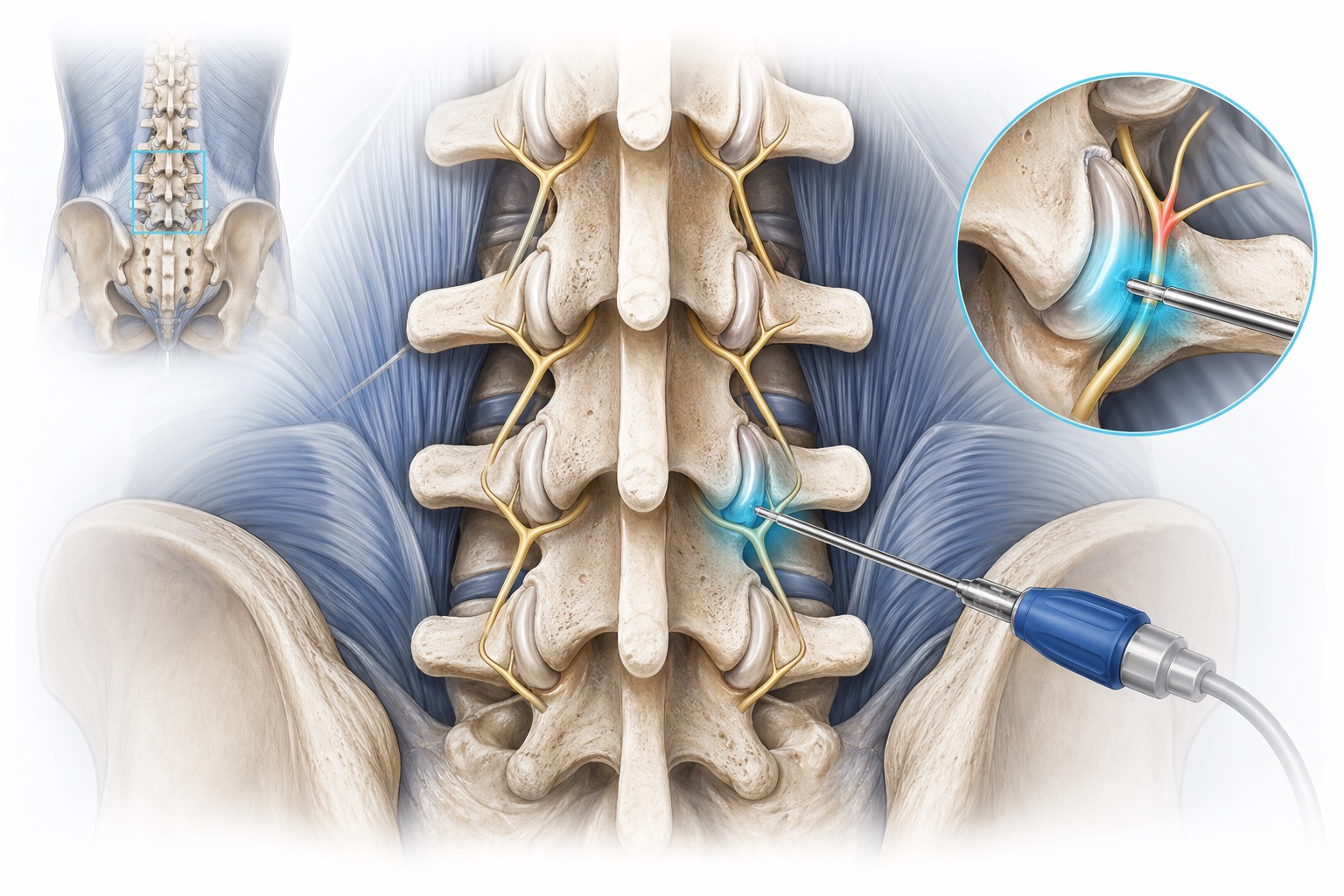
Uses controlled heat energy to disrupt selected pain-signal pathways, usually after diagnostic medial branch blocks support the target.
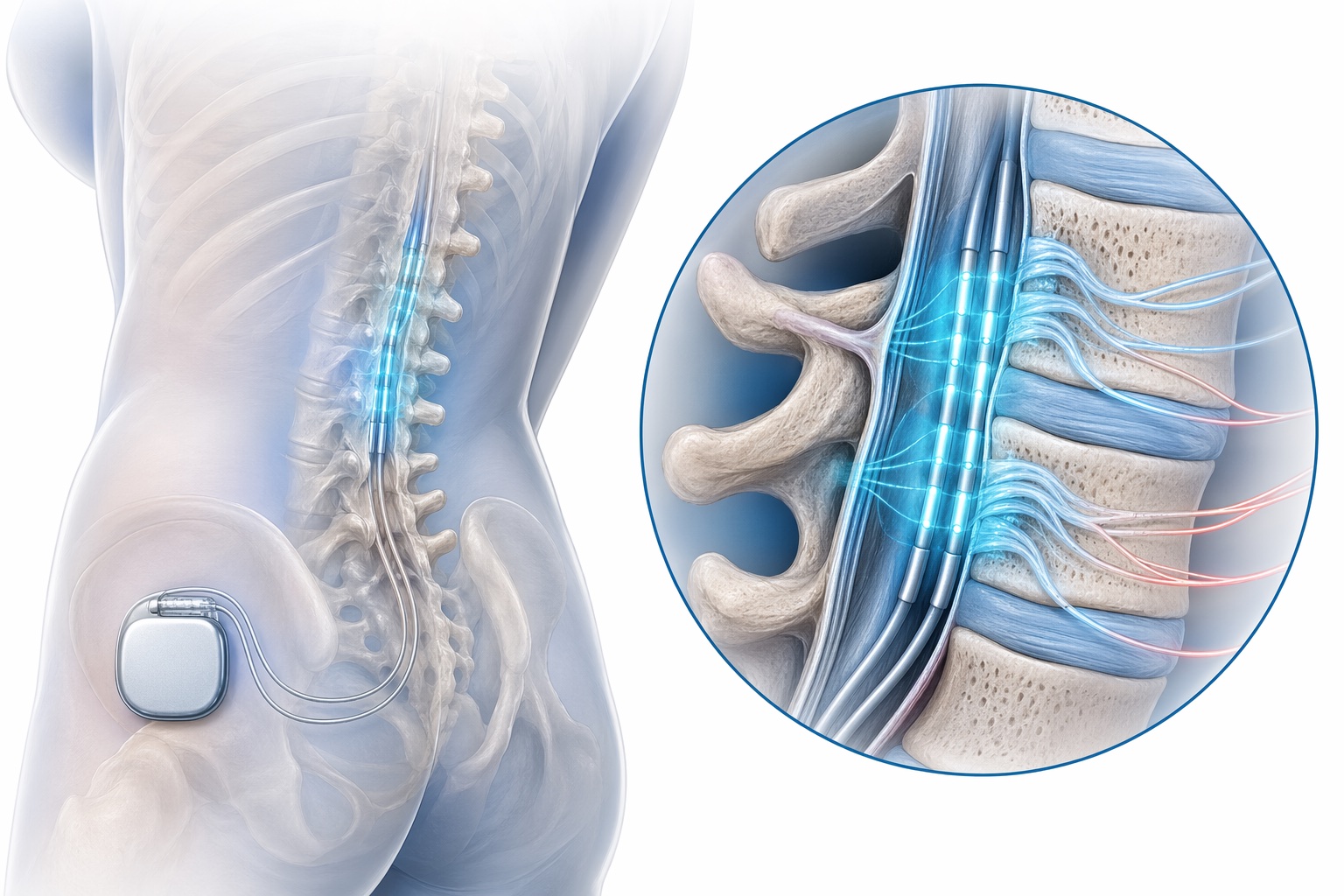
A featured advanced option for selected chronic nerve pain that uses epidural leads and a trial period before permanent implantation is considered.
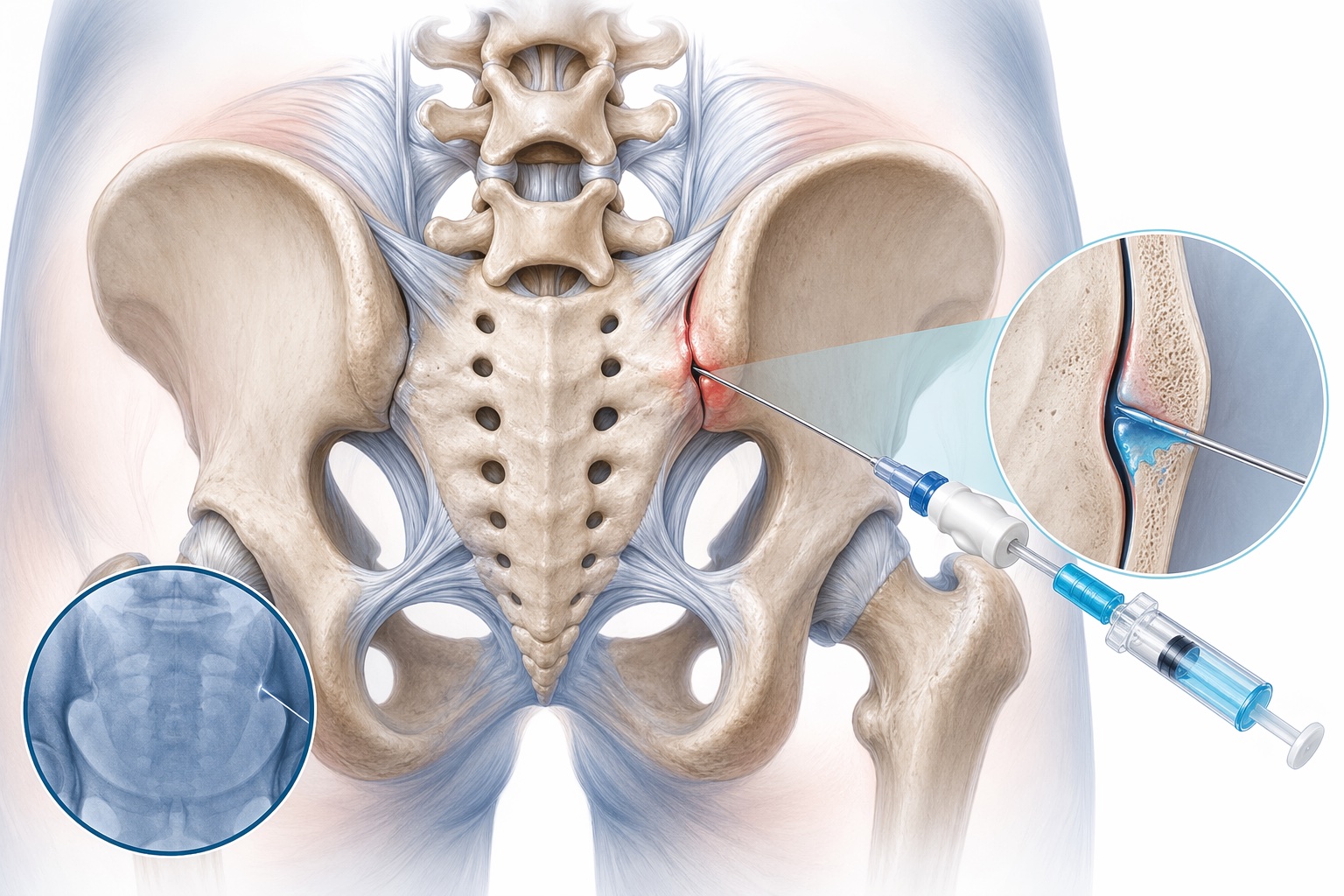
From selected SI fusion pathways to fluoroscopy or ultrasound-guided injections, precise guidance can help place medication accurately when the SI joint, spine, pelvis, or extremity joint is suspected.
Your care is guided by physicians trained in anesthesiology and interventional pain medicine, with dedicated profiles available when you want to review background, focus areas, and credentials.
Meet the physicians13009 Gulf Commerce Dr, Suite 200, Houston, TX 77034. Appointments, referrals, and treatment planning for Greater Houston patients.
1015 W. Medical Center Blvd, Suite 2800, Webster, TX 77598. Convenient access for Bay Area, Clear Lake, and southeast Houston patients.

Call the practice or request an appointment online. The team can help match your symptoms to the right visit, location, and next step.